US consumer inflation remains quite low, although last month saw gains in the cost of gas, rent, and health care. With tame inflation throughout 2019, consumer inflation is now at a yearly high. The consumer price index (CPI) rose 0.3%, slightly above expectations of 0.2%.
Key Takeaways
- Energy, health care, and rent costs rose in November as inflation costs rose to the highest point in a year.
- The CPI came in at 0.3% vs. 0.2% expected, increasing the cost of living.
- Gains in the cost of living rose from 1.8% to 2.1% in the 12 months through November.
Despite inflation rising to the highest point since November 2018, inflation is still low by historic standards. Tame inflation pressure throughout 201 was a major factor in the Fed’s decision to implement the first interest rate cuts in a decade.
Seasonally adjusted, the price of gasoline rose 1.1% in November, although dropped when measured by the dollar amount. The adjusted cost of rent and medical care increased by 0.3%. Prices for food, clothes, education, and used vehicles all saw slight increases, while the cost of new cars and trucks fell for the fifth month in a row. Airfare costs also dropped slightly.
Core inflation, which strips out food and energy costs, rose 0.2% monthly and saw no change at 2.3% annual growth. Adjusted for inflation, hourly wages were flat in November and rose 1.1% annually.
Consumer inflation reached a six-year high of 2.9% growth in 2018 before slowing considerably, allowing the Fed to cut rates to mitigate recessionary pressure amid the ongoing trade war. The central bank doesn’t expect inflation to significantly exceed the target range of 2% in the near future.
US consumer inflation's 1yr change rose to a 12mo high in Nov (+2.1%), but core inflation held steady at +2.3% (modestly above Fed's 2% target), suggesting that pricing pressures remain stable and inflation isn't poised to accelerate in the near future: https://t.co/MXELgnSJs3 pic.twitter.com/2LosR87rDT
— James Picerno (@jpicerno) December 11, 2019
Monetary Policy
The Fed’s preferred gauge of inflation, the PCE, saw 1.3% growth in the 12 months through October, indicating mild inflation. November PCE data is due for release later this month. The latest inflation report follows a report on Friday that revealed an additional 266,000 jobs added to the economy in November, well above expectations. With the employment rate near historically low levels at 2.5% and other upbeat reports from housing, trade, and manufacturing, the US economic appears to be still underway.
The Federal Reserve is expected to leave interest rates unchanged at Wednesday’s upcoming monetary policy meeting.
Market Reaction
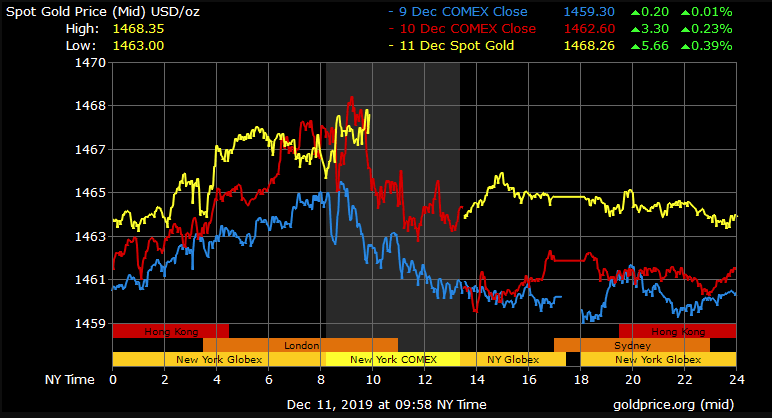
Gold prices have ticked upward slightly following the news. Spot gold last traded at $1,468.26/oz, up 0.39% with a high of $1,468.35/0z and a low of $1,463.00/oz. The inflation report was relatively in line with expectations, resulting in low volatility so far in the financial markets.
Royce Mendes, senior economist at CIBC, acknowledged that the yearly high in inflation was noteworthy, but unlikely to cause any big waves for traders. “US inflation came in a touch hotter than expected, but it shouldn't do much to move markets today,” he said.